Build a Sustainable Dinner
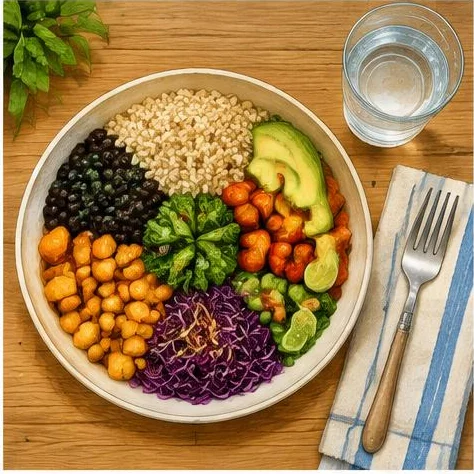
The pantry
🌱 Plant foods
🥩 Animal foods
Your dinner
Your plate is empty. Tap some food!
Water
about 0 litres of fresh water
Land
about 0 m² of land for a year
Carbon
about 0 g CO₂e
Empty plate
Tap some foods to build your dinner and watch the footprints appear.
Where these numbers come from: each food shows the portion we used. We multiplied that amount by global-average figures per kilogram (or per litre of milk) from a large food life-cycle study of about 38,000 farms (Poore & Nemecek, Science, 2018), published by Our World in Data. Water means fresh water taken from rivers, lakes and the ground; land means area used for one year. Real farms, recipes and cooking vary a lot, so treat these as a comparison between kinds of food, not exact measurements of your dinner.
Continue exploring
What makes a balanced plant plate?
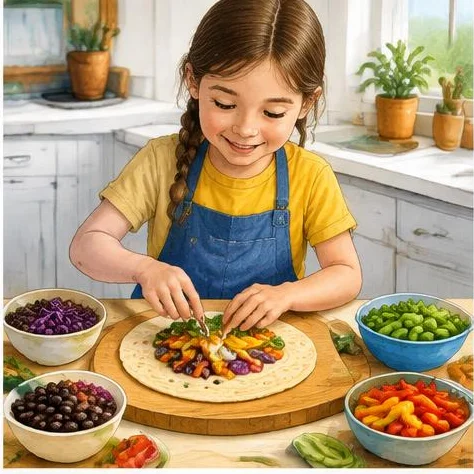
1. Fill half with colour
Vegetables and fruit bring fibre, vitamins and minerals. Different colours often mean different nutrients, so try to mix them.
2. Add protein and grains
Beans, lentils, tofu, nuts or seeds give protein. Rice, oats, pasta or bread give energy. Together they keep you full and strong.
3. Compare footprints fairly
The scores in this game are rounded estimates for one portion. Real numbers depend on how and where food is grown, so use them to compare, not as exact facts.
Growing children need enough energy, vitamin B12 and iodine on a fully plant-based diet. Families should talk to a doctor or dietitian when changing what they eat.
Parents & TeachersCompare meals with fair questions
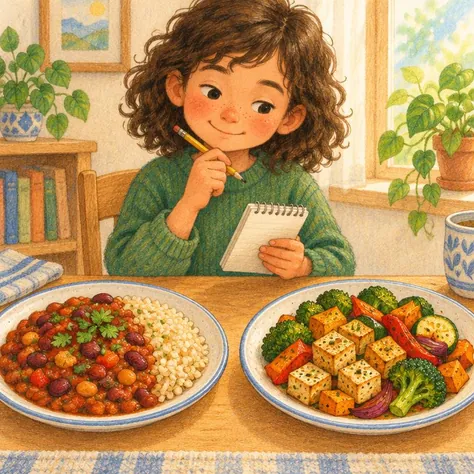
Are the planet numbers in the dinner game exact for my food?
No. They are rounded averages from large studies. The real impact of one meal depends on where and how the food was produced. The game is good for comparing food groups, not for measuring one plate exactly.
1. Compare like with like
Compare similar portions, such as one serving of beans with one serving of beef. Very different amounts make a fair comparison impossible.
2. Look at more than one measure
Check water, land and carbon together. A food can be low on one measure and higher on another.
3. Talk about the whole meal
A healthy plate also needs variety and enough energy. Plan a meal with a grown-up that is tasty, filling and kind to the planet.
Your field challenge
Ages 7–9
Build two dinners in the game and say which used less land.
Talk about it
Which result surprised you most, and what question would you ask next?