Story Maker
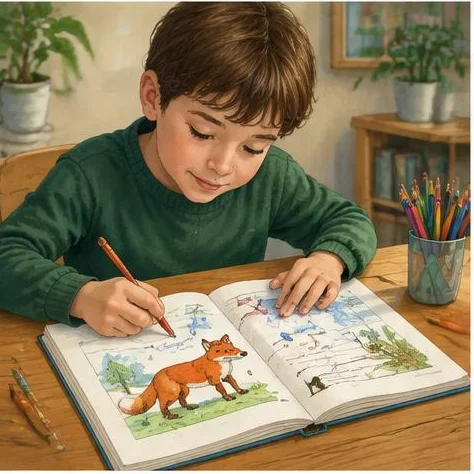
What does every story need?
A character, a place, a feeling and a problem are useful ingredients for an adventure story. Changing one ingredient can lead to a different tale. There are many other ways to tell a story, too.
Loading the story maker…
Continue exploring
Make the story your own
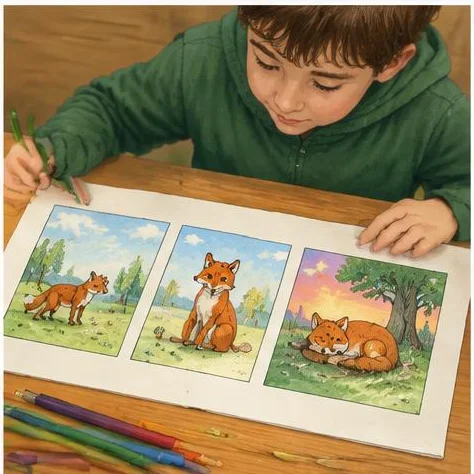
1. Beginning: meet your hero
Where is your animal? What do they want? Add one detail you can see, hear or smell so a reader can imagine the place.
2. Middle: try a kind solution
Give your hero a problem and two possible actions. What might happen after each choice? Kindness can mean listening, asking for help or giving someone space.
3. Ending: show the change
How does your hero feel now? Draw what changed. Read the story to someone and ask which part they remember.
Animals can speak in fiction. In real life, learn about each species rather than assuming it thinks exactly like a person. This story maker combines written choices without an AI request.
Parents & TeachersWrite animal characters that feel true
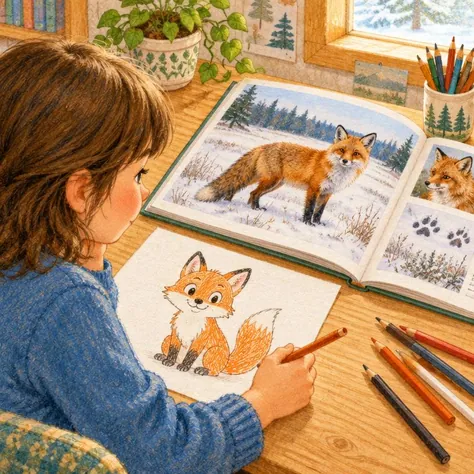
Can an animal story be imaginative and still accurate?
Yes. Talking animals are make-believe, but the story can still respect real behaviour: where the animal lives, what it eats and how it moves. Mixing true details with imagination helps readers learn while they enjoy the tale.
1. Choose one real fact
Look up your animal on its profile page. Pick one true detail, such as a fox's hearing or a penguin's huddle, to build the story around.
2. Give the character a feeling and a problem
Decide what your character wants and what gets in the way. Keep feelings simple and say what makes them change during the story.
3. Mark what is pretend
At the end, tell your reader which parts were real and which you invented. This helps everyone tell story from science.
Your field challenge
Ages 7–9
Write three sentences: the beginning, the problem and the happy ending.
Talk about it
Which true fact made your story more interesting?