Skip to content

I am aโ€ฆ

Loading your saved age setting

Planty Kid Magazine

Issue 44 โ€” a fresh one appears every week. Curious facts, good news and a puzzle at the end.
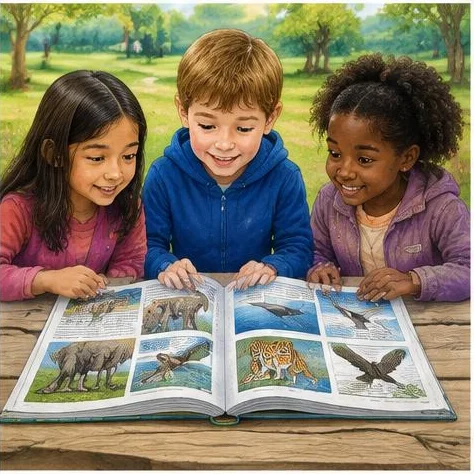
Children reading an animal magazine

Animal of the week

Elephant

Elephants talk in deep rumbles that travel far

Elephants send low rumbles through the air, and scientists think other elephants may also feel the vibrations in the ground through their feet.

Three curious facts

  • Elephants greet friends by twisting trunks together.
  • They comfort an upset friend by touching them gently.
  • An elephant can recognise herself in a mirror.
Plant food of the week

Peanuts

Where it grows: Underground! After the flower is pollinated, a stalk called a peg grows down into the soil, and the pod forms there.

What it gives you: Protein, healthy fats and energy for running about.

Try it: Peanut butter and banana on toast, with a sprinkle of cinnamon.

โœจ Peanuts are not true nuts โ€” they are legumes, in the same plant family as peas and beans.

Science corner

How plants build a complete protein

Protein is made of 20 building blocks called amino acids. Beans have plenty of lysine, and grains have more methionine. Eating both across the day โ€” like beans on toast โ€” helps your body get enough of each.

Tap foods to add their blocks

Your protein so far

This game shows four of the nine essential amino acids. Real foods contain many amino acids in different amounts.

  • Lysineadd a food that has more
  • Methionineadd a food that has more
  • Tryptophanadd a food that has more
  • Leucineadd a food that has more

Pick a food to start building.

๐ŸŒˆ Good news for animals

  • Rescue ยท 2020

    European bison are back in the wild

    European bison once survived only in zoos. After they were returned to the wild, their numbers grew from about 1,800 in 2003 to over 6,200 in 2019, and the IUCN moved them from Vulnerable to Near Threatened.

    Source: IUCN โ€” European bison recovering

  • Habitat ยท Every May

    Lawns left to bloom for bees

    Each May, the charity Plantlife invites people to stop mowing part of their lawn so daisies, dandelions and clover can flower and feed bees and butterflies. Even a small wild patch helps.

    Source: Plantlife โ€” No Mow May

  • Law ยท 2008โ€“today

    Ships slow down for right whales

    Along parts of the US East Coast, most large ships must slow to 10 knots or less at certain times of year. Slower ships are less likely to hit endangered North Atlantic right whales.

    Source: NOAA Fisheries โ€” Reducing vessel strikes to right whales

Young changemaker spotlight

Theo, age 11

Asked his school to add one plant-powered day a week, and cooked a sample lunch for the kitchen team.

โ€œI brought chilli in a flask. The cooks liked it more than I expected!โ€

๐Ÿ’ก You could try this: Cook one plant-powered dinner with a grown-up and share the recipe with a friend.

Changemakers are made-up examples inspired by the kinds of projects real children run โ€” not real people.

๐Ÿ’ฅ Comic of the week

A wobbly new friend turns up at the sanctuary kitchen and nobody knows what he is. Starring Clara, Pip & Toby.

โ€œWheee! Hello world!โ€โ€” Toby

A small white cube bounces off the kitchen shelf and lands in the meadow.

Panel 1 of 6 ยท use โ† and โ†’ keys too

๐Ÿงฉ Weekly puzzle

Odd one out

Which of these is NOT a legume?

Continue exploring

Read like a curious fact-checker

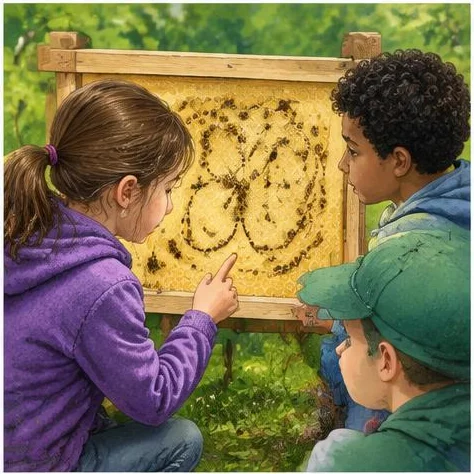
Children observing bees outdoors with a grown-up

Does a changing weekly issue mean every item is breaking news?

No. The magazine rotates a curated collection of learning items. An inspiring example is not automatically a new report or proof of what happens everywhere. Check dates, sources and context before sharing a claim.

  1. 1. Separate facts from opinions

    A measured animal behaviour can be investigated. Calling an animal the best or cutest is an opinion. In a comic, talking animals are fictional even when the surrounding lesson uses real science.

  2. 2. Ask who, when and where

    For a good-news claim, look for a named organisation, a date and a place. If those details are missing, treat it as a starting point for research rather than a verified current update.

  3. 3. Follow a question beyond the issue

    Choose one animal or food fact and compare it with a source in Parents & Teachers. A single rescue story does not show how every sanctuary works; a single study does not settle every question.

Your field challenge

Ages 7โ€“9

Find one opinion and one fact in what you read. Explain how you could check the fact.

Think it through

A story describes one animal learning a puzzle. What does that show?

Talk about it

Which claim would you check before telling a friend?