Seeds · 10 minutes, then watch for 7 days
Bean in a Jar
🤔 Which grows out of the bean first: the root or the shoot?
I am a…
Loading your saved age setting
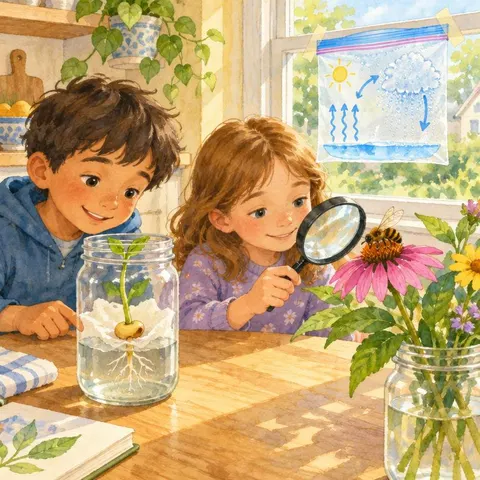
🧪 0 of 6 experiments finished
Seeds · 10 minutes, then watch for 7 days
🤔 Which grows out of the bean first: the root or the shoot?
Water · 10 minutes, then watch for 2 days
🤔 Will water inside a sealed bag disappear, stay the same, or move around?
Weather · 15 minutes, then check daily for a week
🤔 Will more rain fall on a windy day or a calm day?
Pollinators · 10 minutes
🤔 Which flower colour gets the most visitors?
Water · 5 minutes, then wait 2 hours
🤔 If you cover a leafy branch with a bag, what will appear inside?
Seeds · 10 minutes, then watch for 5 days
🤔 Which seeds sprout fastest: cress, lentils or sunflower?
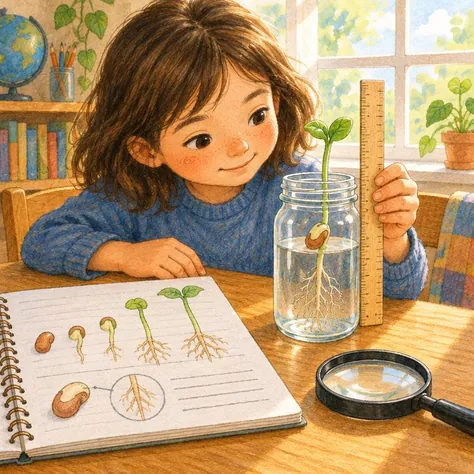
A good prediction says what you think will happen and why. Writing it first stops you changing your mind after you see the result.
Change one thing at a time and keep other conditions as similar as you can. This helps you investigate a possible cause, but one trial does not prove it.
Draw or measure every day. A surprising result is not a failure; it is a new question to explore.
Do every experiment with a grown-up. Wash your hands afterwards, never taste materials and watch wildlife without touching it.
Parents & Teachers
No. An observation can support an explanation without proving it is the only possible one. Repeat a trial, record unexpected results and consider other causes. A home experiment is a useful starting point, not a substitute for a large study.
Before starting, say what you expect and why. Afterwards, record what you actually saw or measured. Keep both records even if the result differs from your prediction.
Ask whether you changed more than one thing. Different seed types, container sizes or light levels could each affect growth. A careful comparison makes explanations easier to assess, but cannot remove every uncertainty.
Try again with safe materials and adult supervision. If results differ, keep the differences in your record. Do not erase an unusual result simply to make the experiment look successful.
Ages 7–9
Tell a grown-up one observation and one possible explanation. Keep the two separate.
What new question did an unexpected result give you?