Every country has plant-powered food it loves. Pick a flag and taste your way around the planet.
Do people eat plant-based food all over the world?
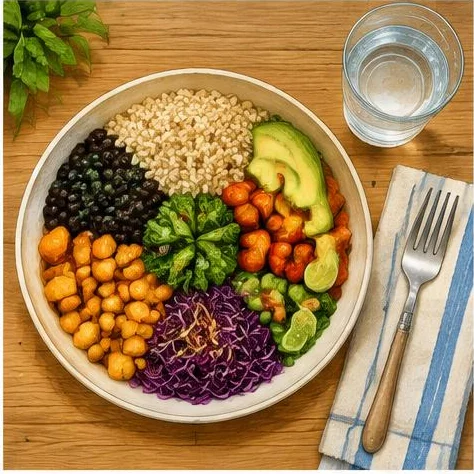
Yes. Beans, grains, vegetables and spices are the heart of everyday meals on every continent — from chana masala in India to moi moi in Nigeria and quinoa salad in Peru.
🇮🇳 India — Chana masala 🍛
Chickpeas simmered with tomato, ginger and warm spices, scooped up with flatbread.
Kindness here
India has more plant-eating families than any other country, and cows wander safely through many towns.
Try this today
Smell one spice from the cupboard and guess what it is with your eyes closed.
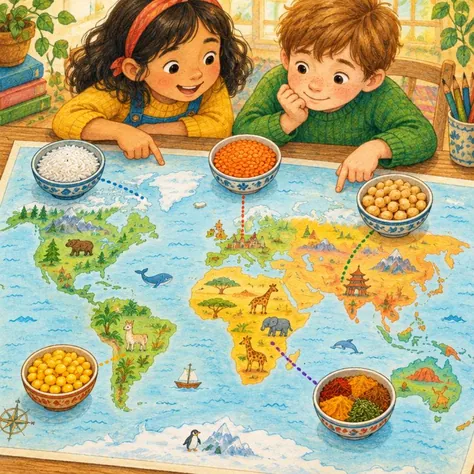
Many traditional dishes are built on plants: dal in India, black beans in Brazil, hummus in the Middle East. Find a country on the map and spot its legume.
2. Ask at home
What does your family cook that is made mostly from plants? Ask a grown-up where the recipe comes from and add it to your own map.
3. Respect every culture
People eat differently because of climate, history and what grows nearby. Learning about other foods is about curiosity, not deciding who is right.
Facts on this page are simplified. Each country has many regions and many ways of cooking, so use them as a starting point for your own research.
No. Countries contain many communities, regions and cooking traditions. Recipes also travel and change. The map offers examples, not rules about what every person eats or how kind a whole country is.
1. Choose one dish
Pick a dish from the map and identify a plant ingredient. Ask whether that ingredient appears in a dish your family knows. Similar ingredients can be prepared in very different ways.
2. Look for the local detail
With a grown-up, find a recipe from a cook or cultural organisation connected to that tradition. Check the region and ingredient list. Versions may include different sauces, toppings or animal ingredients.
3. Adapt with respect
If you change a recipe for allergies or availability, call it your version. Do not describe a simplified classroom recipe as the only authentic way. Ask permission before sharing a family's recipe or story.
Your field challenge
Ages 7–9
Find two dishes using the same plant ingredient. Say one way they are prepared differently.
Talk about it
What could you ask a cook that a map label cannot answer?