Animal Sounds & Voices
What is animal communication?
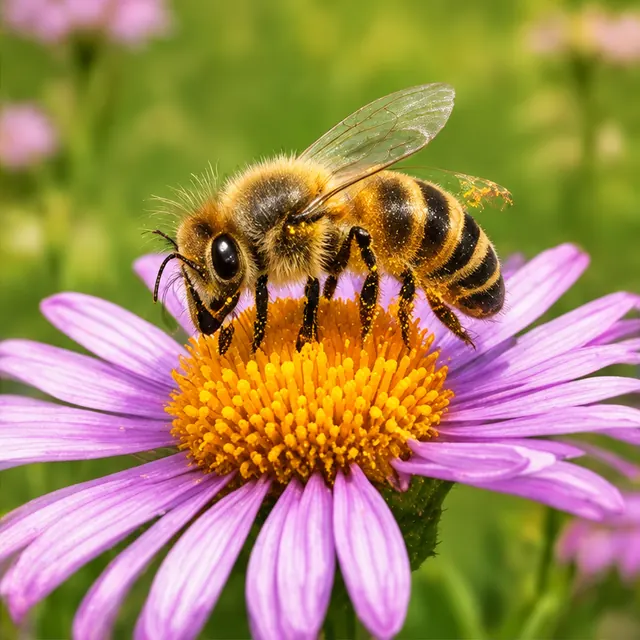
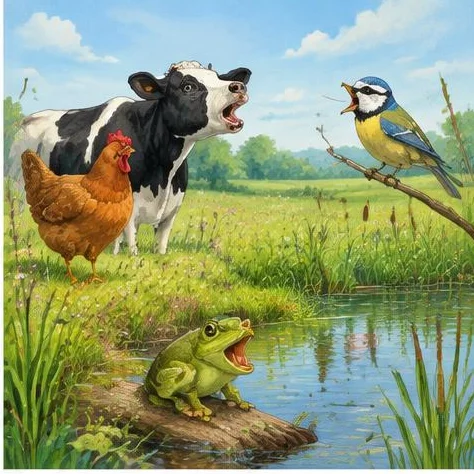
Animal communication is how animals send each other information — with sounds, body language, movement or smell. A hen's cluck, a dog's play-bow and a bee's waggle dance are all messages with real meaning.
Loading the sounds…
Questions about animal talk
- Do animals really talk to each other?
- Animals communicate using sounds, body language, movement and smells. Cows and calves can recognise each other's calls, and honeybees use a waggle dance to share information about food locations.
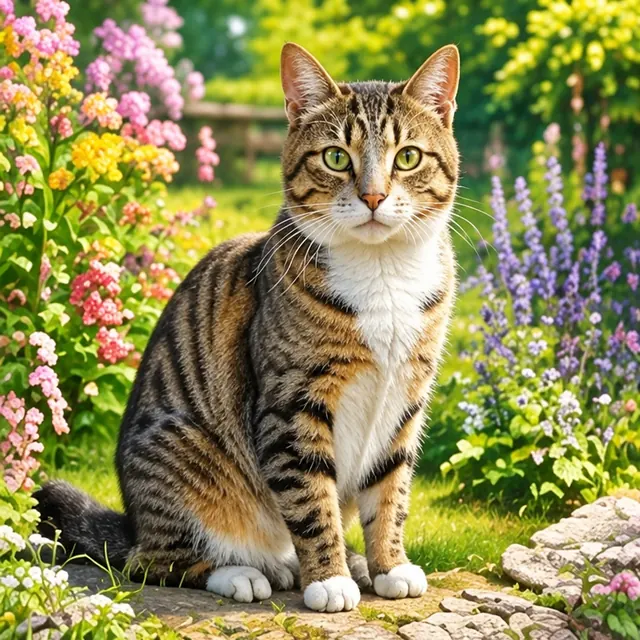
- Why does my cat meow at me but not at other cats?
- Adult cats mostly meow at humans. Kittens meow at their mothers, and cats keep doing it with people because it works — we come and help.
Continue exploring
Listen like an animal scientist
1. Sound is one clue
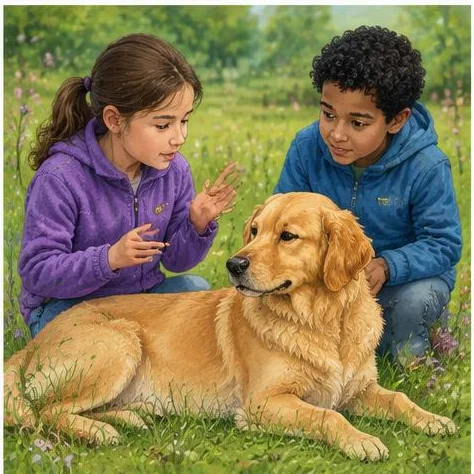
A call alone does not tell you everything an animal feels. Look at its posture, the situation and whether it can move away.
2. Make a listening map
Sit quietly outdoors with a grown-up. Draw yourself in the middle of a page and mark where each sound comes from. Can you hear a bird without seeing it?
3. Give animals space
Watch without chasing, touching or playing calls back to wildlife. Repeated playback can disturb birds. A quiet observer learns more.
The calls in this activity are playful sound impressions, not field recordings. Real animals sound different, and similar calls can mean different things in different situations.
Parents & TeachersBuild a quiet listening survey
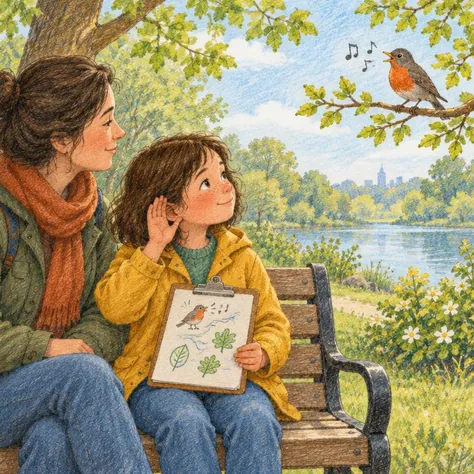
Can a sound tell you exactly which animal is nearby?
Sometimes a recognisable call is a useful clue, but an unfamiliar sound is not enough for a confident identification. Listen for repetition and direction, then compare with a reliable recording. Silence does not mean there are no animals.
1. Choose a quiet place
Stay with a grown-up in a safe public place or your garden. Stand or sit still for a short period. Keep away from roads, water edges and nests; you do not need to approach an animal.
2. Describe the sound first
Use words such as high, low, repeated, short or long. Mark its direction on a drawing. Record traffic and wind too, so you do not mistake every sound for an animal.
3. Check without disturbing
Later, compare your description with a trusted bird or animal guide. Keep uncertain sounds marked as unknown. Do not play calls outdoors to lure wildlife closer.
Your field challenge
Ages 7–9
Draw three sound directions. Separate sounds you recognise from sounds you are unsure about.
Talk about it
Which sound made you curious, and what evidence would help identify it?