Turkey facts for kids
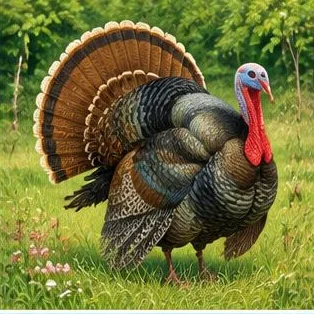
Farmed Animals · North American forests, woodland edges and open feeding areas
- Biology and species
- Wild turkey (Meleagris gallopavo); domestic forms differ. Wild turkeys are large North American birds; unlike some domestic breeds, they can fly. Wild turkeys may gather in flocks; grouping changes with season.
- Social life
- Wild turkeys may gather in flocks; grouping changes with season.
- How they talk
- Gobbles and other calls help turkeys communicate.
- Babies
- Poults follow their mother after hatching and feed for themselves.
- Adaptations
- Flight helps wild turkeys reach tree roosts.
Conservation evidence
This entry describes a domestic animal. Domestic breed welfare and wild-species conservation are different questions; no global wild population estimate is assigned here.
Collectible rarity labels are game rewards, not conservation categories. Historical figures and dated assessments are not live population counts.
Sources for this animal
Did you know?
- Wild turkeys are large North American birds; unlike some domestic breeds, they can fly.
- They eat seeds, nuts, plant material and insects.
- Flight helps wild turkeys reach tree roosts.
Quick answers
Where do turkeys live?
North American forests, woodland edges and open feeding areas
What biology facts should we know about turkeys?
Wild turkey (Meleagris gallopavo); domestic forms differ. Wild turkeys are large North American birds; unlike some domestic breeds, they can fly. Wild turkeys may gather in flocks; grouping changes with season.
Do turkeys live in groups?
Wild turkeys may gather in flocks; grouping changes with season.
How do turkeys communicate?
Gobbles and other calls help turkeys communicate.
What conservation information is available for turkeys?
This entry describes a domestic animal. Domestic breed welfare and wild-species conservation are different questions; no global wild population estimate is assigned here.
Facts describe the species or group named above. Follow the sources for evidence and assessment dates; findings about one species do not automatically apply to all related animals.