Red-eyed Tree Frog facts for kids
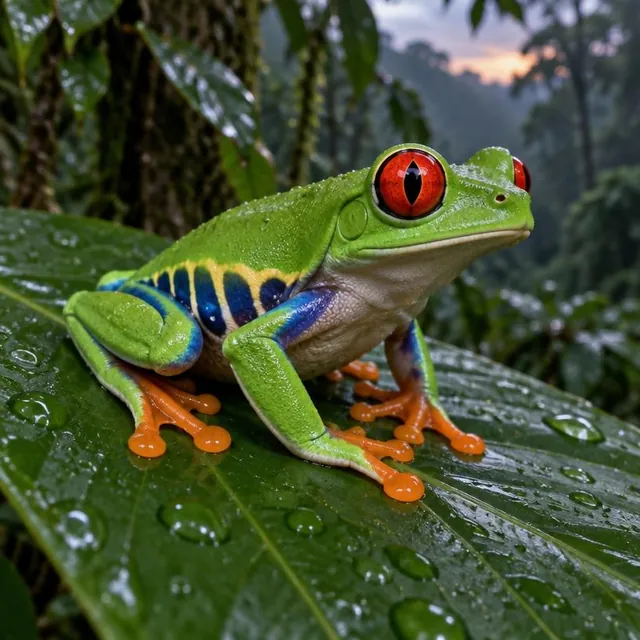
Wildlife · Humid rainforests near ponds and streams, from southern Mexico through Central America to northern South America
- Biology and species
- Red-eyed tree frog (Agalychnis callidryas). Red-eyed tree frogs are nocturnal, tree-living amphibians of humid rainforests. They need permanent water nearby to breed, and their eggs are laid on the underside of leaves above ponds.
- Social life
- Adults are sometimes seen together, but scientists have not described a social order, and parents do not look after their eggs.
- How they talk
- Males call to attract females, and the frogs also shake branches to send vibrations to each other.
- Babies
- Eggs are laid on leaves above water. The tadpoles live in the water for several weeks before changing into froglets.
- Adaptations
- Embryos inside their eggs can sense vibrations, and the timing of hatching can change when predators such as snakes or wasps attack.
Conservation evidence
Red-eyed tree frog: Least Concern, with a decreasing population trend. IUCN publication 2020, assessed 21 June 2016; global scope. This is not a current population count. Amphibians as a whole are a separate question: about 41% of assessed amphibian species were threatened in the Second Global Amphibian Assessment (2023).
Collectible rarity labels are game rewards, not conservation categories. Historical figures and dated assessments are not live population counts.
Sources for this animal
Did you know?
- Red-eyed tree frogs are 4 to 7 centimetres long; females are usually larger than males.
- Suddenly showing their bright red eyes can startle a predator for a moment.
- Embryos inside their eggs can sense vibrations, and the timing of hatching can change when predators such as snakes or wasps attack.
Quick answers
Where do red-eyed tree frogs live?
Humid rainforests near ponds and streams, from southern Mexico through Central America to northern South America
What biology facts should we know about red-eyed tree frogs?
Red-eyed tree frog (Agalychnis callidryas). Red-eyed tree frogs are nocturnal, tree-living amphibians of humid rainforests. They need permanent water nearby to breed, and their eggs are laid on the underside of leaves above ponds.
Do red-eyed tree frogs live in groups?
Adults are sometimes seen together, but scientists have not described a social order, and parents do not look after their eggs.
How do red-eyed tree frogs communicate?
Males call to attract females, and the frogs also shake branches to send vibrations to each other.
What conservation information is available for red-eyed tree frogs?
Red-eyed tree frog: Least Concern, with a decreasing population trend. IUCN publication 2020, assessed 21 June 2016; global scope. This is not a current population count. Amphibians as a whole are a separate question: about 41% of assessed amphibian species were threatened in the Second Global Amphibian Assessment (2023).
Facts describe the species or group named above. Follow the sources for evidence and assessment dates; findings about one species do not automatically apply to all related animals.