Octopus facts for kids
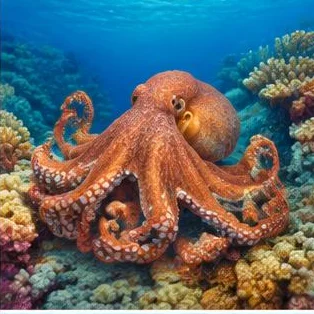
Wildlife · Marine habitats; common octopuses use rocky and sandy coastal seabeds
- Biology and species
- Octopuses; common octopus (Octopus vulgaris) as an example. Octopuses are cephalopod molluscs, not fish; they have eight arms and no external shell. Many octopuses are mainly solitary; species and situations differ.
- Social life
- Many octopuses are mainly solitary; species and situations differ.
- How they talk
- Changing skin colour and texture can provide camouflage and signals.
- Babies
- Female common octopuses guard their eggs; development differs between species.
- Adaptations
- Suckers help octopuses grip and investigate objects.
Conservation evidence
Conservation status must be checked for a named species and region. This overview does not assign one threat category or population total to a whole animal group.
Collectible rarity labels are game rewards, not conservation categories. Historical figures and dated assessments are not live population counts.
Sources for this animal
Did you know?
- Octopuses are cephalopod molluscs, not fish; they have eight arms and no external shell.
- Common octopuses eat crustaceans, molluscs and other prey.
- Suckers help octopuses grip and investigate objects.
Quick answers
Where do octopuses live?
Marine habitats; common octopuses use rocky and sandy coastal seabeds
What biology facts should we know about octopuses?
Octopuses; common octopus (Octopus vulgaris) as an example. Octopuses are cephalopod molluscs, not fish; they have eight arms and no external shell. Many octopuses are mainly solitary; species and situations differ.
Do octopuses live in groups?
Many octopuses are mainly solitary; species and situations differ.
How do octopuses communicate?
Changing skin colour and texture can provide camouflage and signals.
What conservation information is available for octopuses?
Conservation status must be checked for a named species and region. This overview does not assign one threat category or population total to a whole animal group.
Facts describe the species or group named above. Follow the sources for evidence and assessment dates; findings about one species do not automatically apply to all related animals.